Lt. Col. Boyd "Buzz" Wagner
America’s First U.S. Army Air Forces Ace of World War II
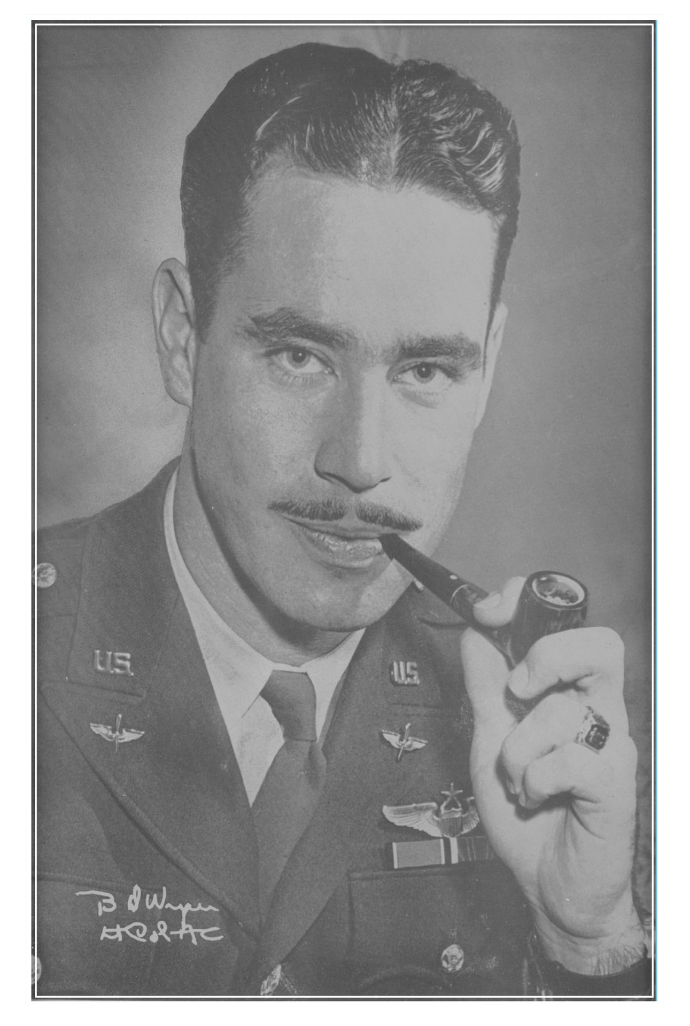
Some heroes become household names. Others quietly shape history before fading from public memory. Lt. Col. Boyd David “Buzz” Wagner belongs among the first group.
A gifted pilot, innovative tactician, and natural leader, Wagner became the first U.S. Army Air Forces ace of World War II during the opening days of America’s entry into the conflict. At a time when the nation was searching for hope after the attack on Pearl Harbor, his courage and determination demonstrated that American pilots could stand against Japan’s experienced air forces. His accomplishments earned him the Distinguished Service Cross and established him as one of the nation’s earliest wartime heroes.
Early Life
Born in Cambria County, Pennsylvania, in 1916, Boyd David “Buzz” Wagner graduated from Nanty Glo High School before continuing his education at the University of Pittsburgh at Johnstown. After two years, he transferred to the University of Pittsburgh’s main campus to study Aeronautical Engineering.
Driven by a passion for aviation and service to his country, Wagner left college a year before graduation to enlist in the United States Army Air Corps. He earned his commission and quickly distinguished himself during flight training. Fellow pilots recognized not only his remarkable flying ability but also his understanding of aerodynamics and aircraft performance, qualities that made him one of the most respected young officers in the service.
His skill at flying extremely low to the ground earned him the nickname “Buzz.”
Retired Major General Joe Moore, who served alongside Wagner in the Philippines, later remarked that Buzz Wagner was the finest pilot he had ever seen.
A Hero in the Opening Days of World War II
When Japan attacked Pearl Harbor on December 7, 1941, it also launched devastating attacks against American airfields in the Philippines. Nearly half of the U.S. aircraft stationed there were destroyed on the ground.
Flying the Curtiss P-40 Warhawk, Wagner helped lead the surviving aircraft into combat against experienced Japanese pilots. Despite overwhelming odds, he repeatedly flew interception, bombing, and strafing missions in defense of American forces.
Within the first week of combat, Wagner had destroyed five enemy aircraft, achieving the status every fighter pilot strives for: ace.
In doing so, he became the first U.S. Army Air Forces ace of World War II.
His achievements captured the nation’s attention during one of its darkest moments. Newspapers across America followed his exploits, and LIFE magazine featured Wagner in a major photo spread, introducing millions of Americans to the young pilot whose confidence and courage represented hope for a nation at war.
A Legacy Cut Short
Buzz Wagner’s remarkable career ended tragically on November 29, 1942, when his P-40 crashed during a routine flight from Eglin Field, Florida, to Maxwell Field, Alabama. The cause of the accident has never been conclusively determined.
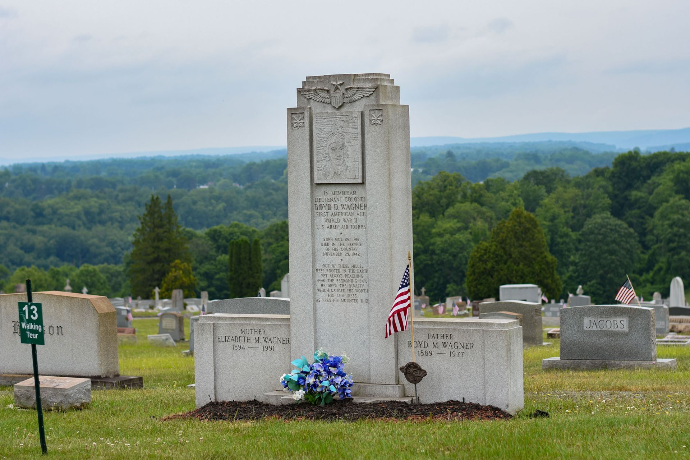
He was buried with full military honors at Grandview Cemetery in Johnstown, Pennsylvania, where approximately 15,000 mourners gathered to pay their respects, a testament to the profound impact he had made in just twenty-six years.
Preserving His Legacy
More than six decades after Wagner’s death, members of the Air & Space Forces Association’s Lt. Col. B.D. “Buzz” Wagner Chapter 221 renewed efforts to ensure his story would not be forgotten.
In 2008, retired U.S. Air Force Colonel James Moschgat located the long-lost crash site of Wagner’s aircraft after years of research. Working in cooperation with Eglin Air Force Base, members recovered Wagner’s high school class ring, wristwatch, and other personal effects. Additional remains discovered at the site were respectfully repatriated and interred during a ceremony that included a military flyover, a tribute fitting for one of America’s pioneering fighter pilots.
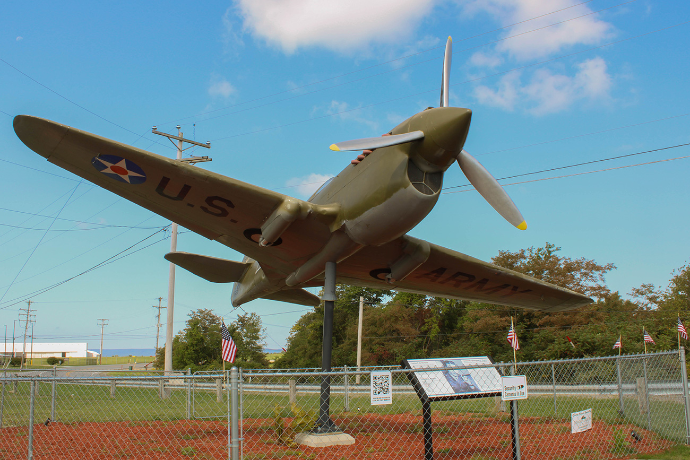
More recently, Chapter 221 raised the funds necessary to acquire and install a full-scale replica of Wagner’s Curtiss P-40 Warhawk at John Murtha Johnstown-Cambria County Airport. Today, the aircraft stands as a permanent tribute to Wagner’s service and sacrifice, ensuring that visitors to the region can learn the story of one of America’s earliest World War II heroes.
Continuing the Mission
The story of Buzz Wagner is more than a story of aerial victories. It is a story of courage, innovation, leadership, and service.
Through historical research, public presentations, documentary filmmaking, and community outreach, the Air & Space Forces Association’s Lt. Col. B.D. “Buzz” Wagner Chapter 221 is committed to preserving his legacy and introducing new generations to the extraordinary Pennsylvanian whose achievements helped inspire a nation during one of the most challenging periods in its history.
Details for the page were prepared by Col. Karen Esaias, USAF Retired and formatted for publication by Dr. J. Matthew Sernell